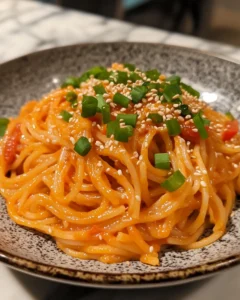
Spicy, savory, and utterly addictive—Bold Gochujang Pasta is the kind of dish that instantly wakes up your taste buds. Perfect for weeknight dinners, casual gatherings, or whenever you crave something with a punch, this pasta combines tender noodles with a creamy, umami-packed gochujang sauce that balances heat, sweetness, and depth of flavor. Each forkful delivers a bold, unforgettable taste that feels indulgent yet surprisingly approachable to make at home.
The inspiration for this recipe comes from the Korean classic flavors of gochujang, the fermented chili paste that’s beloved for its sweet, spicy, and savory complexity. By transforming it into a pasta sauce, we create a dish that’s vibrant, comforting, and exciting—turning ordinary noodles into a flavor-packed experience.
Why This Gochujang Pasta Is a Flavor Bomb
What makes this pasta irresistible is its balance of bold flavors and textures. The creamy sauce coats each strand of pasta, while gochujang provides a sweet-spicy umami punch that’s both fiery and deeply satisfying. Topped with fresh vegetables or protein, it becomes a complete meal with layers of taste and texture.
Unlike traditional pasta sauces, this one surprises your palate with unexpected depth, making every bite exciting. It’s perfect for spice lovers, food enthusiasts, or anyone looking to elevate weeknight dinner beyond the ordinary.
Ingredients for Bold Gochujang Pasta
-
12 oz (340 g) spaghetti, fettuccine, or your favorite pasta
-
2 tablespoons vegetable or olive oil
-
1 small onion (120 g), finely chopped
-
3 cloves garlic, minced
-
1 medium red bell pepper (150 g), thinly sliced
-
1 medium carrot (80 g), julienned
-
1/2 cup (120 ml) heavy cream or coconut cream
-
2 tablespoons gochujang (Korean chili paste)
-
1 tablespoon soy sauce
-
1 teaspoon sesame oil
-
1/2 teaspoon sugar or honey
-
1/4 teaspoon black pepper
-
1/4 cup (15 g) chopped green onions
-
1 tablespoon sesame seeds for garnish
-
Optional protein: grilled chicken, shrimp, or tofu
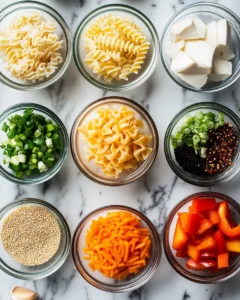
Step-by-Step Instructions for Gochujang Pasta
Begin by preparing the pasta. Bring a large pot of salted water to a boil and cook your pasta according to the package instructions until it reaches al dente—tender but still slightly firm to the bite. Once cooked, reserve ½ cup (120 ml) of the pasta water before draining. This starchy water will be used later to adjust the sauce consistency and help it cling to the noodles perfectly. Drain the pasta and set aside, keeping it warm while you prepare the sauce.
Next, heat oil in a large skillet over medium heat. Add the chopped onion and sauté for 3–4 minutes until it becomes translucent and soft. Cooking the onion first allows its natural sweetness to develop and creates a flavorful base for the vegetables and sauce.
Add the minced garlic, sliced bell pepper, and julienned or thinly sliced carrot to the skillet. Cook the vegetables for an additional 3–4 minutes, stirring occasionally. The goal is to soften the vegetables while retaining a slight crunch, which adds texture and visual appeal to the finished dish. The garlic should become fragrant, releasing a warm aroma that enhances the overall flavor profile.
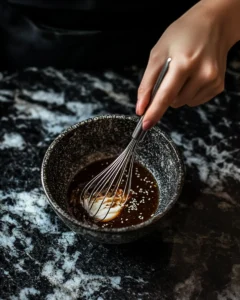
While the vegetables cook, prepare the Gochujang sauce in a small bowl. Combine heavy cream, gochujang (Korean red chili paste), soy sauce, sesame oil, sugar, and black pepper. Whisk thoroughly until smooth and creamy. The heavy cream balances the spiciness of the gochujang, while the sesame oil adds a nutty depth, and the soy sauce provides savory umami notes. The touch of sugar rounds out the flavors, creating a harmonious, slightly sweet and spicy sauce.
Pour the sauce into the skillet with the vegetables and stir to combine. Cook for 2–3 minutes, allowing the sauce to thicken slightly and coat the vegetables evenly. The heat will help the flavors meld together, infusing the vegetables with the creamy, spicy sauce. Taste the sauce and adjust the seasoning if needed, adding a pinch of salt or extra gochujang for heat according to your preference.
Add the cooked pasta directly into the skillet, tossing gently to ensure every strand is coated in the sauce. If the sauce feels too thick, add a splash of the reserved pasta water to loosen it. This step ensures the noodles are evenly coated and silky, while maintaining the desired consistency. Continue cooking for 1–2 minutes, stirring occasionally, until the pasta is fully heated and the sauce clings beautifully to each piece.
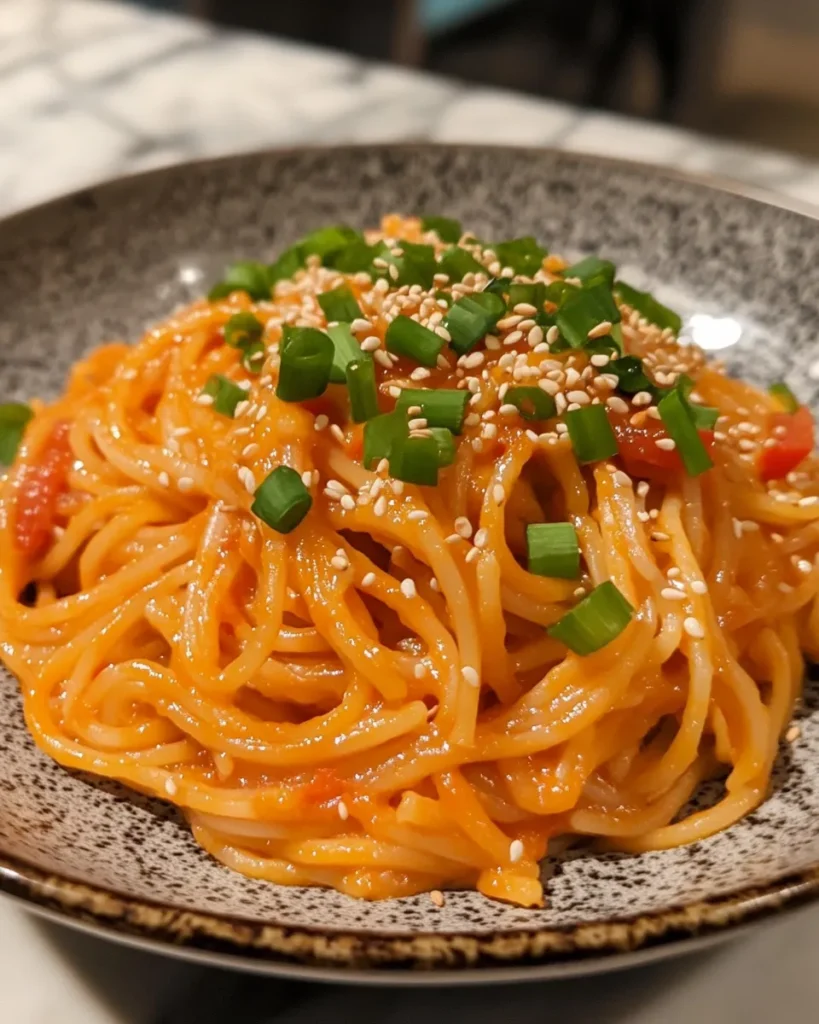
Once everything is well combined, remove the skillet from heat and prepare for serving. Garnish the dish with sliced green onions and a sprinkle of toasted sesame seeds for freshness, color, and a slight crunch. These garnishes add both visual appeal and complementary flavors that enhance the creamy, spicy sauce.
For added protein, you can serve this pasta with grilled chicken, shrimp, or tofu, adding another layer of texture and substance to make it a complete meal.
Serve the Gochujang Pasta hot, straight from the skillet. Each bite should be a delicious balance of creamy, spicy, and savory flavors with tender noodles, lightly crisp vegetables, and fragrant garnishes. The combination of textures—the soft pasta, slightly crunchy vegetables, and the rich, velvety sauce—makes this dish both comforting and exciting.
This pasta is perfect for weeknight dinners, quick meals, or when you want a flavor-packed, Asian-inspired dish. The creamy gochujang sauce is versatile, bold, and easy to make, transforming simple ingredients into a restaurant-quality dish in under 30 minutes. Its balance of spice, creaminess, and umami ensures every bite is satisfying and memorable.
Tips for Maximum Flavor
-
Adjust gochujang to taste: more for a spicier kick, less for mild heat.
-
Use fresh vegetables to maintain crunch and color.
-
Toast sesame seeds lightly in a dry pan to enhance their nutty aroma.
-
Incorporate a splash of lime juice or rice vinegar for a bright, tangy contrast.
Easy Variations
-
Swap cream for coconut milk for a dairy-free, slightly tropical twist.
-
Add mushrooms or zucchini for more texture and depth.
-
Stir in kimchi for a tangy, fermented flavor boost.
-
Top with crispy fried shallots for added crunch.
Frequently Asked Questions
Can I make this pasta ahead of time?
Yes, you can prep the sauce and vegetables in advance to save time, especially for busy weeknights or meal prep. Store the sauce in an airtight container in the refrigerator for up to two days. When you’re ready to serve, cook the pasta fresh and toss it with the pre-prepared sauce and vegetables. This ensures the noodles maintain their ideal texture and the vegetables stay crisp-tender. Avoid tossing the sauce with the pasta too early, as the noodles can absorb too much liquid and become soggy. For added convenience, you can also lightly sauté the vegetables right before serving to refresh their texture and flavor.
Is gochujang very spicy?
Gochujang has a moderate level of heat, but it’s balanced by a natural sweetness and umami richness. The flavor is more complex than a simple chili paste, offering depth with a hint of fermented tang. If you prefer a milder dish, start with a smaller amount and taste as you go, gradually increasing until it reaches your desired level of spiciness. Conversely, if you enjoy heat, adding an extra teaspoon or a pinch of chili flakes can intensify the kick without overpowering the dish. Gochujang’s versatility makes it a great base for experimenting with bold, Korean-inspired flavors in pasta dishes.
Can I use other noodles?
Absolutely! While spaghetti is traditional and works beautifully with this sauce, other types of noodles like linguine, fettuccine, or even rice noodles are excellent alternatives. When switching noodles, adjust the cooking time to ensure they remain al dente. Thicker noodles like fettuccine may hold more sauce, while thinner noodles like spaghetti or rice noodles cook faster and absorb flavors differently. Choosing the right noodle allows you to customize the dish to your preference while maintaining a balanced texture.
Can I add protein?
Yes! Adding a protein makes this pasta a complete, satisfying meal. Grilled chicken, sautéed shrimp, or marinated tofu pair wonderfully with the bold flavors of the gochujang sauce. Simply cook your protein separately and fold it into the pasta just before serving to keep it tender and flavorful. For an extra layer of taste, consider marinating the protein in a bit of gochujang, soy sauce, or garlic before cooking—it will complement the sauce and create a harmonious, cohesive dish.
Extra Tips
Garnish the pasta with sesame seeds, chopped green onions, or a drizzle of sesame oil for extra flavor and texture. Serving immediately after tossing ensures the noodles stay perfectly coated and the dish remains fresh, vibrant, and satisfying.
Serving Suggestions
Serve Bold Gochujang Pasta with a sprinkle of green onions and sesame seeds. Pair it with a simple side salad, steamed vegetables, or light miso soup for a complete meal. Its vibrant color and bold flavor make it a show-stopping dish for weeknights or casual entertaining.
Final Thoughts
Bold Gochujang Pasta is a flavor bomb that transforms ordinary noodles into an extraordinary experience. The creamy, spicy, and savory sauce clings to every strand, delivering a satisfying combination of heat, sweetness, and umami. It’s a dish that feels indulgent yet approachable, perfect for both adventurous eaters and comfort food lovers alike.
What makes this recipe stand out is its balance—spicy but not overpowering, creamy but not heavy, and simple to prepare yet complex in flavor. The fresh vegetables and optional protein add texture and substance, making it a well-rounded meal that satisfies both hunger and taste.
Whether you’re craving a weeknight dinner that’s exciting or want to impress friends with minimal effort, Bold Gochujang Pasta is the ultimate flavor-packed dish. It’s bold, memorable, and guaranteed to make your taste buds dance.
PrintBold Gochujang Pasta: A Flavor Bomb for Your Taste Buds
A spicy, creamy, and savory pasta coated in a gochujang sauce with fresh vegetables, sesame seeds, and green onions.
- Prep Time: 10 minutes
- Cook Time: 15 minutes
- Total Time: 25 minutes
- Yield: 4 servings 1x
Ingredients
-
12 oz (340 g) pasta of choice
-
2 tablespoons vegetable or olive oil
-
1 small onion (120 g), finely chopped
-
3 cloves garlic, minced
-
1 medium red bell pepper (150 g), thinly sliced
-
1 medium carrot (80 g), julienned
-
1/2 cup (120 ml) heavy cream or coconut cream
-
2 tablespoons gochujang
-
1 tablespoon soy sauce
-
1 teaspoon sesame oil
-
1/2 teaspoon sugar or honey
-
1/4 teaspoon black pepper
-
1/4 cup (15 g) chopped green onions
-
1 tablespoon sesame seeds
-
Optional: grilled chicken, shrimp, or tofu
Instructions
-
Cook pasta; reserve 1/2 cup pasta water, then drain.
-
Sauté onion in oil 3–4 minutes.
-
Add garlic, bell pepper, and carrot; cook 3–4 minutes.
-
Whisk together cream, gochujang, soy sauce, sesame oil, sugar, and pepper.
-
Add sauce to skillet; stir 2–3 minutes.
-
Toss pasta in skillet with sauce; add reserved water if needed.
-
Cook 1–2 minutes, garnish with green onions and sesame seeds, serve.